
Selecting a qualified industrial ethernet cable is the foundation of stable data transmission for automated production lines, robotic systems and machine vision equipment. Unlike ordinary office network cables, industrial-grade cables must withstand repeated bending, oil, abrasion and strong electromagnetic interference. Many project engineers encounter downtime, packet loss and premature cable failure due to improper cable selection. This guide breaks down core selection criteria, shielding options, jacket material comparison and common mistakes, helping you pick the right cable for your automation projects.
What Makes Industrial Ethernet Cable Different From Office Network Cable
Regular patch cords for office LAN are designed for static installation and mild indoor environments. An industrial ethernet cable is engineered for harsh factory conditions.
The core differences lie in conductor structure, jacket material and bending resistance. Office cables use solid single copper conductor, while dynamic automation applications often require multi-strand fine copper conductors for repeated movement.
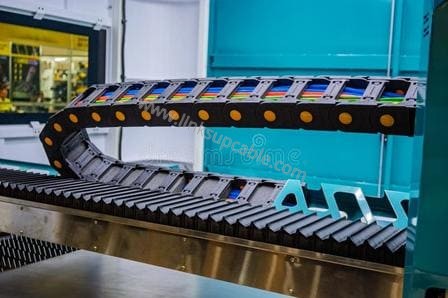
If your equipment moves back and forth continuously, you need high flex drag chain ethernet cable specially designed for cable carrier applications. Ordinary network cables will crack and break after thousands of bending cycles and cannot survive long-term operation inside drag chains.Special considerations are also required for continuous‑flex robot cables installed on robotic joints with combined bending and torsional stress.
Understand Cable Shielding: UTP, FTP and S/FTP

Electromagnetic interference is the biggest threat to factory network signals. Motors, inverters and welding equipment will generate heavy EMI, which causes data packet loss.
- UTP (Unshielded Twisted Pair): No shielding, suitable for low-interference static wiring in clean workshops.
- FTP (Foiled Twisted Pair): Overall aluminum foil shielding, basic anti-interference performance.
- S/FTP (Screened Foiled Twisted Pair): Individual pair foil shielding plus overall braided mesh, the highest anti-interference grade.
For heavy interference workshops, shielded cat6a industrial cable or Cat7 full-shielded cables are recommended. Our cat7 sftp ethernet patch cord adopts double-layer shielding structure, effectively isolating EMI for machine vision and high-speed data acquisition systems.
Jacket Material Selection for Different Factory Environments

Outer jacket determines the cable’s resistance to oil, abrasion, low temperature and flame.
- PVC: Low cost, suitable for dry, room-temperature static wiring. Not oil-resistant and poor in cold resistance.
- TPE / TPU: High flexibility, oil-resistant, wear-resistant, low-temperature resistant. Ideal choice for drag chain moving cables.
- LSZH: Low smoke zero halogen, flame retardant, used for public automation control rooms and indoor projects with fire safety requirements.
Speed & Bandwidth: Match Cable Category With Your Transmission Requirement
Choose Cat grade according to your required transmission speed and distance:
- Cat5e: 1Gbps@100m, for general low-speed industrial control
- Cat6: 1Gbps@100m / 10Gbps@55m
- Cat6a: 10Gbps@100m, widely used in modern automation
- Cat7: 10Gbps@100m with full shielding, for high interference environment
- Cat8: 40Gbps for short-distance high-density data transmission
Important note: Always choose fluke tested industrial network cable. Fluke channel certification verifies the real transmission performance, instead of relying only on printed cable marking. Uncertified cables often fail in actual on-site testing.
Key Selection Checklist for Automation Cabling Projects
Before placing bulk orders, check these factors one by one:
- Motion type: Static installation or reciprocating movement inside drag chain
- Bending radius and required bending cycles
- EMI level on site, decide whether shielded cable is needed
- Environment: Oil, chemical, low temperature or flame retardant requirement
- Transmission speed and distance
- Connector termination: RJ45, M12 or open flying leads for custom assembly
Common Mistakes When Buying Industrial Ethernet Cables
Mistake 1: Using office-grade network cable for moving drag chain. It will break quickly under cyclic bending.
Mistake 2: Buying shielded cable but using unshielded RJ45 connectors. The shielding system becomes incomplete and loses anti-interference effect.
Mistake 3: Ignoring Fluke test report. Many cheap cables cannot reach the bandwidth marked on the jacket.
Custom Industrial Cable Solutions From Our Factory
As a professional ethernet cable manufacturer, we produce Cat5e, Cat6, Cat6a, Cat7 and Cat8 network patch cords and industrial moving cables. We support OEM custom length, color, connector assembly and private packaging. All our industrial cables pass strict factory testing. Contact us to get cable datasheets and free samples for your project evaluation.
FAQ
Q1: What is the best ethernet cable for drag chain automation?
A: High flex TPU jacket Cat6a drag chain ethernet cable is the most popular choice for most automation moving applications.Q2: Do industrial ethernet cables have to be shielded?
A: No. If your workshop has little electromagnetic interference, unshielded Cat6 or Cat6a cables can work well. Shielded cables are required for sites with inverters and high-power motors.Q3: Is Fluke test necessary for industrial network cables?
A: Yes. Fluke certification verifies crosstalk, insertion loss and return loss, to guarantee stable transmission under industrial environment.